
I’ll kick off this little article with a preliminary explanation; I have for years been perplexed by the question that is the title of this article. Personal experience has shown that the question doesn’t seem to hold much if any interest to anyone other than myself. My guess is that everyone, particularly those that dabble in HF have at some time encountered this question but, like me, have chosen to either kick the can down the road, whistle past the graveyard or entirely ignore it. I have asked other several Elmers in the Club for their answer to my question. The answers I received did not do much to satiate an inordinate curiosity. The consensus I received was a vague, frustrating collective virtual shrug of the shoulders. So, with little else to do of late, I set out to answer the question once and for all, for myself as well as for those for whom the answer might also hold interest…
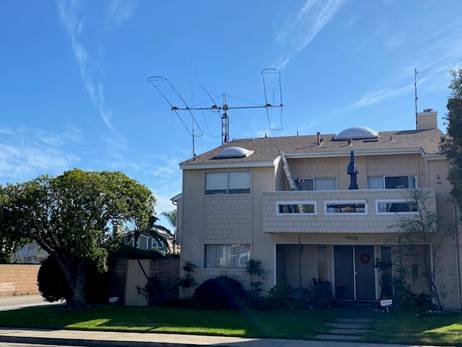
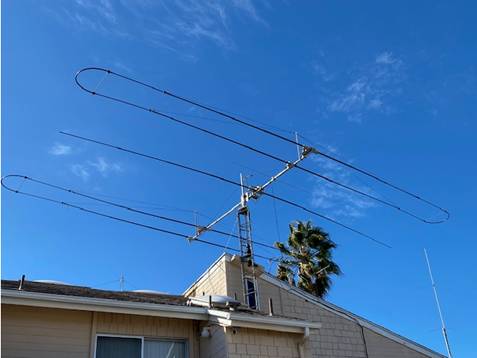
The ACS Tuesday night Net annually alternates between using 40 and 80M bands, i.e. depending on seasonal propagation changes. I participate in these nets. However, my SteppIR HF antenna was designed to operate on 40M; not 80M. So, when 80M is in season I must “compensate”. The SteppIR is rather unique in that it automatically tracks and precisely adjusts its actual physical length to suit the set operating frequency of the transceiver. This feature renders the use of any tuner unnecessary. In order to compensate for the SteppIR’s inability to tune within the 80M band, I first tune into a random frequency on the 40M band. Then I disable the automatic tracking feature of the SteppIR. I then enable my previously bypassed Palstar HF Auto Tuner and tune to the 80M 3.987 MHz ACS Net frequency. The tuner delivers an excellent 1:1.12 SWR match. Cool. The workaround works. But note that the Tuner specs say it can handle up to a 1:10.0 mismatch. Maybe not so cool after all.
Given that the antenna isn’t designed to work on 80M and given that it’s been compelled to do so via me and the Tuner begs the million-dollar question; How much power is really being radiated by the antenna versus how power gently warms the feedline or turns the tuner into a red-hot toaster? It’s a question it would certainly be wise to know the answer to.
Skipping all the mental gymnastics I went through to get there, suffice it to say that I reasoned a way to easily obtain the answer to the question I’ve been asking for years. The solution first necessitates having a handy-dandy Rig Expert antenna analyzer or its functional equivalent. Fortunately for me and this article, I have one. So; Rig Expert in hand and with the Tuner switched inline, I disconnected the antenna line from the transceiver and connected it to the Rig Expert.
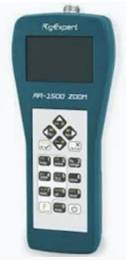
I then adjusted the Rig Expert to provide an SWR reading at 3.987 MHz, i.e. the ACS HF Net frequency. It measured a 1:1.12 SWR as expected, being in agreement with the Tuner’s own built-in SWR meter. Now comes the really cool part. I bypassed the Tuner and watched as the SWR on the Rig Expert shot up to 8.3. Not encouraging or maybe not all that bad. You don’t know until you do the math which is the potentially tedious part of trying to make sense of it all. But I’ll spare you the agony and graciously give you the highlight reel. A few parameters are necessary:
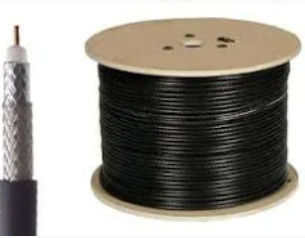
My feedline is 100 feet of LMR-400 and represents a modest 0.04 dB loss. LMR-400 is quite low in losses, especially in the HF region.
The eyebrow-raising 8.3 SWR 40/80M “compensation” surprisingly indicates a loss of only 1.04 dB
The total loss is the sum of these two individual losses or 1.44 dB. Skipping the details, this represents a ~81.5% efficiency at 3.987 MHz, meaning that if I were to transmit at 100 W, 81.5 W would be radiated. Conversely; About 20 W would be lost warming up the Tuner and feedline. I can live with that. After all, it only comes into play for the ACS 80M Net.
I now know two things for an absolute certainty that I did not know before.
– I’ve got excellent signal strength on 80M despite an initial nail-biting mismatch.
– As long as I maintain a reasonably sane power level on 80M, I need not fear frying the tuner or crowbarring the amp.
In summary; I now possess what is to me a satisfactory answer to an old and nagging question. You might want to investigate whether your rig is operating within safe limits and radiating effectively too. Or not… and just continue assuming everything’s just peachy keen. To quote the sage Stewart Stone, “*Your mileage may vary*”.
